

Hermes Agent calls you: real autonomy knows when to ask for a decision
Hermes Agent calls you: real autonomy knows when to ask for a decision
You close your laptop while an AI agent prepares a sales proposal. It gathers the records, builds a draft and finds two conflicting payment terms. Should it use the latest note or the standard commercial sheet? The agent can keep working on the document. It cannot decide which commitment your business should make.
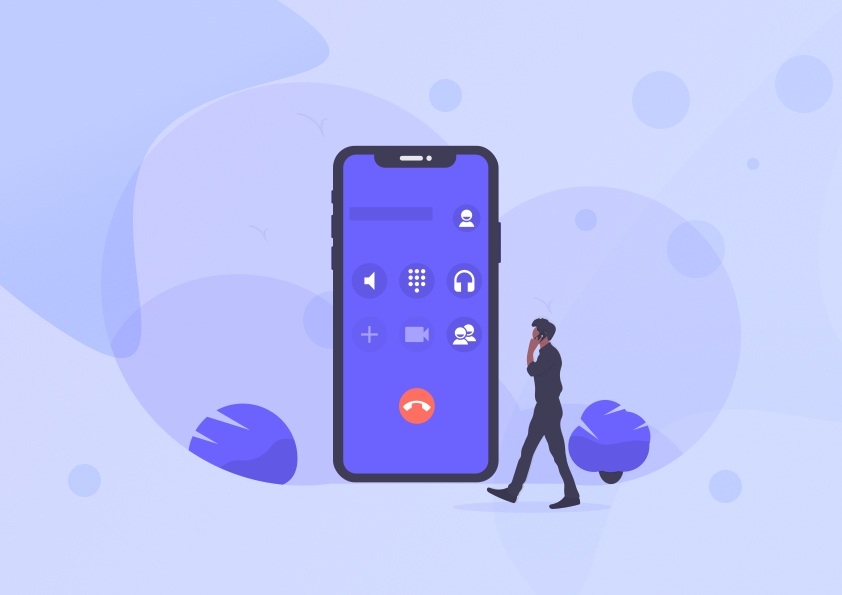
An AI agent calling you is useful when it asks a specific question, keeps your answer and resumes the original task with that decision. For Hermes Agent, documented components such as CallMe make this technically plausible. An integration is still required: a Telegram voice note, speech synthesis and a phone call to your mobile are different capabilities.
The benefit is being able to step away from a screen without leaving an important task stuck behind an unread notification. But the interruption has to earn its place. This article examines the workflow to aim for, what the software actually documents and what a first trial should establish. It is a feasibility analysis, not a live Say Digital phone service or an end-to-end test.
A blocked proposal and a question worth calling about
Consider an illustrative service business asking its agent to draft a proposal. The commercial sheet requires a deposit on order. A more recent meeting note mentions payment on delivery. The agent can identify both sources, but it cannot assume the note overrides the approved terms.
The business owner has explicitly authorised this particular call to an agreed number within an agreed time window. The agent identifies itself as AI and explains: “I’m preparing the proposal. The commercial sheet requires a deposit, but the meeting note says payment on delivery. Which term should I use in the draft?” It does not read out the entire file or call the prospect.
The owner replies: “Keep the deposit. The meeting note was an option we discussed.” The agent confirms: “I’ll keep the deposit in the draft, without sending the proposal.” That decision is linked to the source records and the task. The agent resumes writing and presents the revised version for review. Permission to select a term does not include permission to email the document to the customer.
If nobody answers, that part of the task remains on hold. A Telegram summary explains the conflict, the two options and the decision needed to resume. No invented answer and no repeated dialling. If the question can wait until the owner next checks their messages, a call is unnecessary in the first place.
What CallMe connects between the task and the phone
CallMe is presented as a plugin that lets Claude Code make phone calls while working. Its server uses MCP, a protocol through which AI applications access external tools. In this arrangement, a telephone conversation becomes a tool available to the agent handling the task.
The server implementation exposes tools including initiate_call, continue_call, speak_to_user and end_call. Spoken replies return as text to the MCP client. This matters because the agent can receive an actionable answer within its working context, rather than hand a call to a separate system that never returns the decision.
Telephone transport, speech recognition and speech synthesis remain separate components. The repository describes carrier connections and voice services. It documents an architecture, not guaranteed quality across every network, language or business case.
The direction of this connection also differs from mcp-serve, where Hermes supplies context and functions to another client. The route considered here would make Hermes the client using a telephony server. To resume the draft, the integration must identify which agent is waiting and which task should receive the answer.
Can Hermes Agent resume work after your answer?
The Hermes Agent voice documentation describes several interfaces, including voice notes in messaging platforms. Those interfaces do not by themselves provide access to the telephone network. A Telegram voice note waits inside an app; a mobile call can reach someone who has stepped away from their screen.
Hermes also documents an optional telephony skill. It distinguishes direct Twilio use for spoken announcements or audio playback from conversational providers such as Bland or Vapi. Adding speech recognition and synthesis to Hermes is not, on its own, a two-way telephone calling engine.
Connecting CallMe to a Hermes MCP client is therefore a plausible integration route, not a native feature we can declare ready. CallMe’s supplied end-of-work hook is specific to Claude Code. Connecting the server does not automatically move that call-triggering behaviour into Hermes.
To preserve the task, the integration needs rules for escalation, tool timeouts, the context passed into the call and how the returned answer attaches to the right job. It also needs to handle a connection dropping after an answer: check whether the decision has already arrived before redialling or resuming. Without that continuity, there is a voice conversation, but no reliable return to the original work.
Our analysis of Hermes Agent across monitoring, business memory and action explains why retrieved information is not automatically an approved decision. A call adds a way to request the decision. It does not change the authority of the records or the people involved.
Keep calls for decisions that cannot wait
Before choosing a voice, choose the reason to interrupt. Conflicting payment terms may justify reaching the owner when a proposal needs review within the hour. A formatting preference usually will not. The agent should explain what is blocked, which choices are available and what it will do with the answer.
- Who can be called: a consenting, authorised recipient, with explicit permission for the call. Finding a number in a file is not permission to dial it.
- When and how far: agreed time windows, maximum duration, spending cap and attempt limit. If unanswered, hold the task and send a written summary.
- What decision is retained: identity checks proportionate to the stakes, the question, the confirmed answer and the precise scope of resumed work. A spoken “yes” is not blanket permission to pay, delete or publish.
- What information is shared: only the context needed. No audio recording by default; transcription and service providers still involve data processing that needs to be scoped.
The agent should say that it is AI and explain why it is calling. These rules should keep the exchange short and understandable, not make every drafting choice a compliance exercise. Sensitive actions retain their stronger approval process.
Budget for the decision resolved, not just the call minute
Costs can include the phone number, destination-dependent carrier charges, voice generation, transcription, model usage and connection hosting. A per-minute figure advertised for one setup is not an all-in price guarantee for calls to French mobiles.
In a first trial, track the total time until work resumes, unanswered calls, clarification needed and errors prevented or introduced. A cheap call that interrupts the wrong person mainly spends attention. A written notification remains the better option when it resolves the task in time.
Start with a draft and demonstrate the return to work
Use a non-sensitive file, two contradictory terms and an output limited to a draft. Success has observable steps: the correct owner receives the right question, the answer is confirmed and the draft resumes with the selected term, without being sent to the customer. Also test no answer, an ambiguous reply and a dropped connection. None should be reported as a completed decision.
For a business seeking an AI agency in Paris, this scope comes before choosing a telephony provider. Within the Say Digital Framework, a prototype should establish that evidence before permissions or deployment expand. We claim neither an installation nor a customer result here: the purpose is to define what your workflow would need to demonstrate.
Should your agent reach you to unblock a specific task? Talk to us about the task, the decision and the conditions for a first trial. The booking page is in French. You can step away from the screen while keeping the choice of commercial terms in your hands.
Sources and limitations
Documentary analysis: the CallMe repository, its MCP server tools and Claude Code hook, plus Hermes documentation for voice and optional telephony. The proposal example is invented to explain the workflow. No real call, interoperability trial or end-to-end task-resumption test is claimed.